
Large-scale floating wind tomorrow.
The opportunity
Floating wind is proven.
Its deployment model still needs to change.
The floating wind industry is at an inflection point. Large projects take too long, cost too much and require heavy infrastructure. The market needs a faster route to commercial deployment.
95 GW
Global floating wind project pipeline

~4,000
Floating platforms represented

42%
Average floating wind capacity factor
The bottleneck
500 - 1,000MW
Projects
5 - 8 years
Development cycles
Heavy
Infrastructure
Complex
Financing & Certification
The industry needs a faster route from technology validation to commercial deployment.
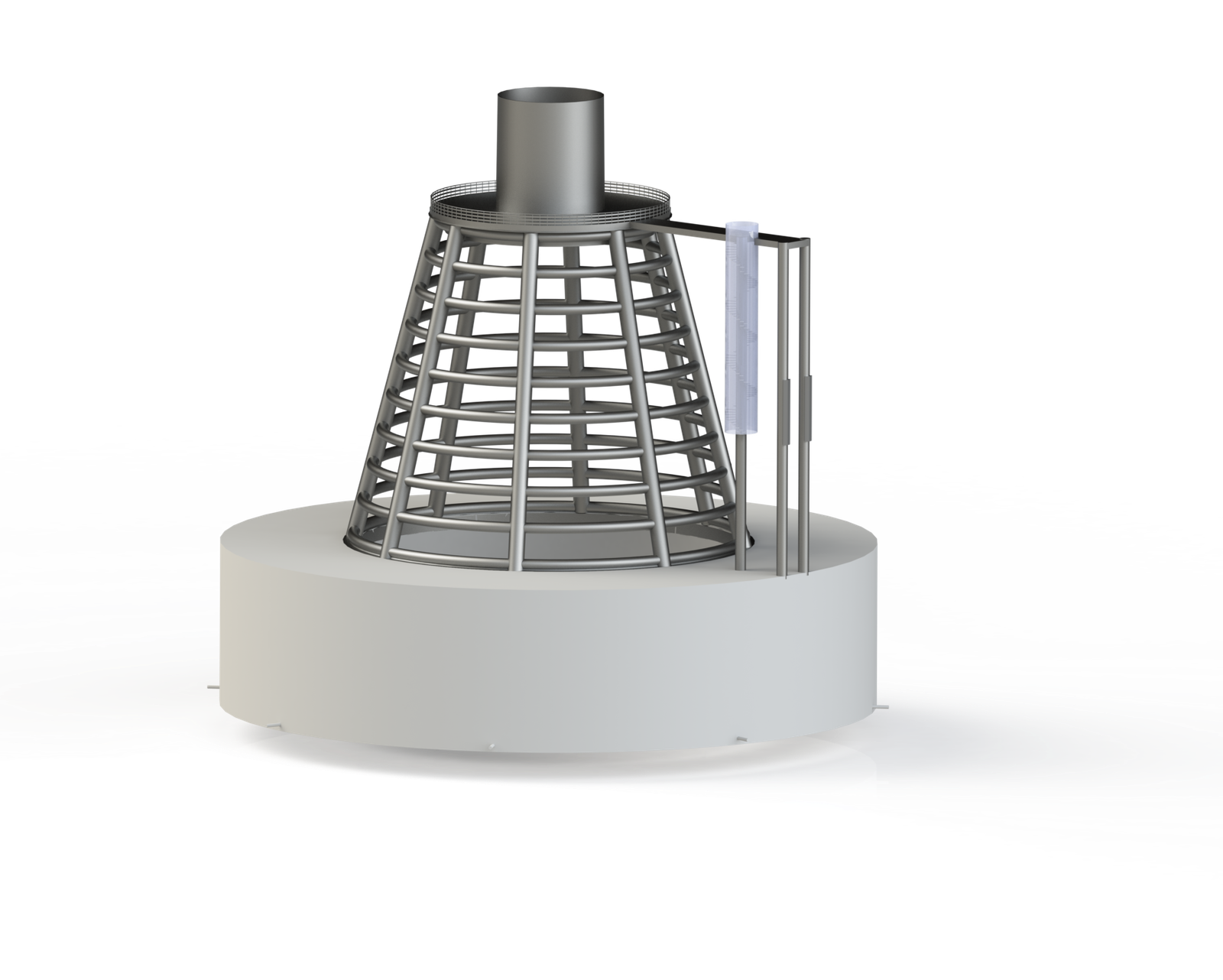
Hyper-Stable architecture
Reduced turbine fatigue and structural loads. Lower loads can extend equipment life, reduce maintenance requirements and reduce loads transferred to tension lines and anchors.
Lightweight structure
Designed to reduce material requirements and simplify production.
-30% mass reduction compared to traditional concrete platforms.
Designed for constrained environment:
Cyclonic • Seismic • Ports – Islands – Offshore infrastructure
Less material.
Lower loads
faster deployment
2 patent families
OUR COMMERCIAL INSIGHT
We don't need to wait for 1 GW wind farms.
Today - 2026+
Ports, islands & off-grid infrastructure:
10-50 MW projects
- High electricity costs
- Diesel dependency
- Week or constrained grids
- Excellent wind ressources
- Urgent decarbonisation requirements
These projects can generate commercial revenue while progressively validating the technology
Tomorrow - 2030+
Utility-scale floating wind
500-1,000 MW projects
The same technology can progressively move toward:
- Grid-connected floating wind
- Standardised platform families
- Industrialised production
- Large-scale deployment
Small commercial projects de-risk the technology. Large projects create the scale.
why ports & islands?
A market that needs floating wind now.
Energy cost
$150-200/MWh
Target economics vs. electricity coats that can reach - S300/MWh in the target environement.
Decarbonisation
Ports are electrifying
- Shore power
- Terminal Operations
- Logistics
- Future fuels
Speed
12-18 months
Target deployment cycle for suitable projects vs. multiyear utility-scale offshore wind development.
Commercial traction
From technology development to commercial deployment
Caribbean port
10 MW floating wind project
Advanced discussions with a Top-3 global shipping player
European industrial ports
Off-grid decarbonisation
Qualification underway with major European industrial players.
ISlands
Diesel replacement & energy resilience
Initial discussions in multiple regions.
Japan / APAC
Port & island application
Strategic contacts established
First commercial project under discussion with a Top-3 global shipping player
First revenues targeted in 2026

why ports & islands?
A market that needs floating wind now.
Energy cost
$150-200/MWh
Target economics vs. electricity costs that can reach - S300/MWh in the target environement.
Decarbonisation
Ports are electrifying
- Shore power
- Terminal Operations
- Logistics
- Future fuels
Speed
12-18 months
Target deployment cycle for suitable projects vs. multiyear utility-scale offshore wind development.
Business model
An asset-light model designed to monetise projects early.
Engineering
- Feasibility
- Pre-FEED / FEED
- System design
Co-development
- Turbine integration
- Mooring
- Electrical architecture
Supply & Deployment support
- Selected components
- Industrial coordination
- Installation support
Licensing
- Recurring high-margin royalties per deployed platform
EOLE STAB can generate revenue 12-24 months before the final project is deployed.
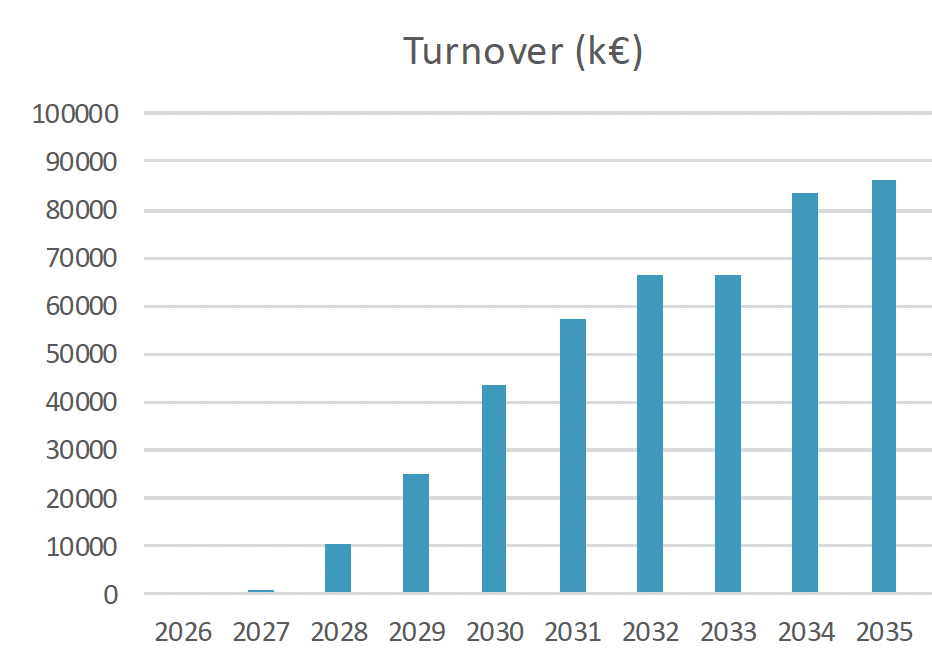
Financial bUSiNESS PLAn
A capital-efficient path to positive cash flow.
- 2026-27: Engineering, licensing & early revenues
- 2028 EBITDA positive
- 2029 Cash-flow positive
- 2030-2035: Scale up through standardisation, replication & licensing
Key finANCIALS (ROUND)
Equity Round size €4 MILLION
Pre-money valuation : ~€8-16 Million
Use of funds
- Certification & testing (BV pathway)
- Technology validation & maturation
- Commercial development & pipeline conversion
- First deployment preparation
Additional French & European public funding programmes under review may finance 30-60% of eligible R&D expenditure.
50% tax advantage
Eole Stab is eligible for the French JEIR investment scheme
our team
Entrepreneurial. Technical. Proven in floating wind.
CEO
Stephanie Durand
Founder, strategy, financing & business development
Managing Director
Thomas Choisnet
Former Technical Director at Ideol, Floatgen, Eolmed & Hibiki projects
CTO
Benjamin Schoumaker
Concrete construction & Industrialisation expert, ex-BW Ideol projects.
Chief Project Officer
Julien Durand
Project development & technology programme
Advisors
Philippe Durand
Technical expert
Guénaël Guillerme
Financial 6 Strategy Advisor
our ecosystem
Supported by a leading French & European ecosystem.
BPI France
Elbe Eurocluster
Region Sud

Rising Sud
France Energies Marines
Enertrag

Cerema
Why invest in EOLE STAB. WHY now.
Technology
Patented platform designed for stability, lower loads and lower cost.
Market
Reduction of maintenance costs thanks to the reduction, and even the elimination, of the accelerations to which classic platforms are subject.
Traction
Thanks to the stability of the EOLE STAB® platform, wind turbines require fewer resources than traditional solutions.
Inflection point
The EOLE STAB® platform accelerates the energy transition at a reduced cost, while also aiding the host country in achieving energy independence.
€4 M equity round
Financing the transition from validation technology to commercial deployment